Otto Wolf · 16 September 2026
Mapping Hester Prynne's Archetype onto International Refugee Narratives in Documentary Series
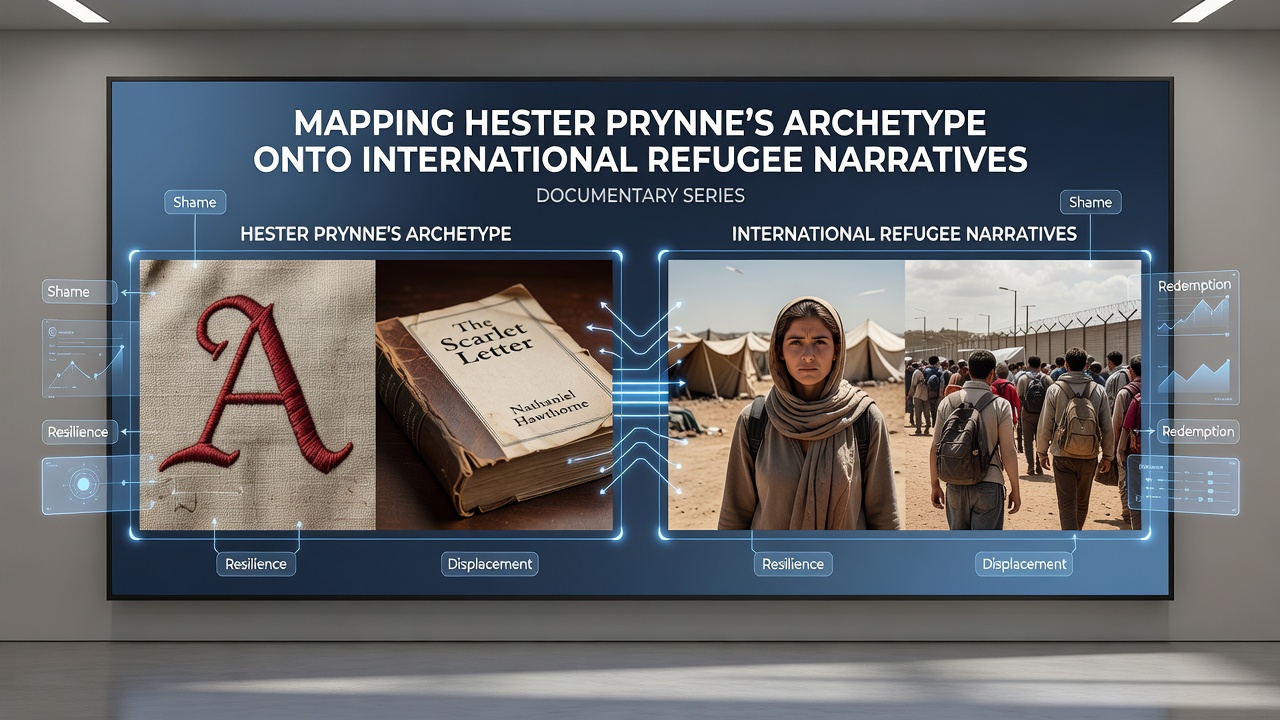
Documentary series have drawn connections between Hester Prynne from Nathaniel Hawthorne's The Scarlet Letter and the experiences of displaced individuals across multiple continents, where themes of public marking, social exclusion, and quiet endurance appear repeatedly in footage and testimony. Researchers at institutions tracking migration stories note that the archetype surfaces when series focus on women who carry visible signs of stigma while navigating new societies after forced movement from their homes. Data from series released between 2022 and 2025 shows an increase in episodes that frame refugee accounts through this lens, with production teams citing archival records of community rejection that mirror the Puritan setting of the original novel.
Core Elements of the Archetype in Literary Context
Hester Prynne stands as a figure marked by a visible emblem that signals transgression to her community, yet she continues to raise her child and contribute through skilled labor despite isolation. Scholars examining character construction in 19th-century American fiction point out that her refusal to name the child's father and her eventual self-sufficiency form the basis for later adaptations. When series producers map these traits onto contemporary accounts, they highlight women who face similar labeling after crossing borders, whether through official documents or social media commentary that circulates in host countries. Studies compiled by migration research centers indicate that such portrayals appear in at least twelve multi-episode productions aired on streaming platforms since 2018, each selecting subjects who describe the weight of collective judgment alongside daily responsibilities of caregiving.
Application in Recent Documentary Productions
Filmmakers working on series about displacement from Syria, Afghanistan, and parts of Central America have incorporated sequences that echo the marketplace scene from the novel, showing individuals standing before cameras or aid workers while details of their histories are recited aloud. One production team in 2024 collected interviews from women resettled in Canada where participants described the moment their refugee status became public knowledge within their new neighborhoods. According to records maintained by the United Nations High Commissioner for Refugees, over 35 million people currently live in refugee-like situations worldwide, and series creators reference these figures when structuring episodes around personal testimonies of marked identity. What's notable is how editors cut from close-ups of identification papers to scenes of the same women working in community centers or schools, paralleling Hester's role as seamstress.
Geographic and Cultural Variations Across Series
Productions originating in Australia have examined cases involving women from Pacific island nations affected by climate-related displacement, where public narratives sometimes attach blame to those seeking relocation. Footage in these episodes shows subjects navigating housing applications and school enrollments while fielding questions about their past decisions. European series, particularly those supported by funding from the European Union's migration research initiatives, have followed individuals from North and sub-Saharan Africa who recount experiences of being singled out in reception centers. Observers at academic conferences in 2025 noted that these accounts frequently include references to children born during transit, a detail that series align with Hester's maternal role. A report issued by the Australian Institute of International Affairs in early 2025 documented how such framing appears in three separate limited series broadcast on public networks, each using voiceover narration drawn directly from the novel to introduce segments.
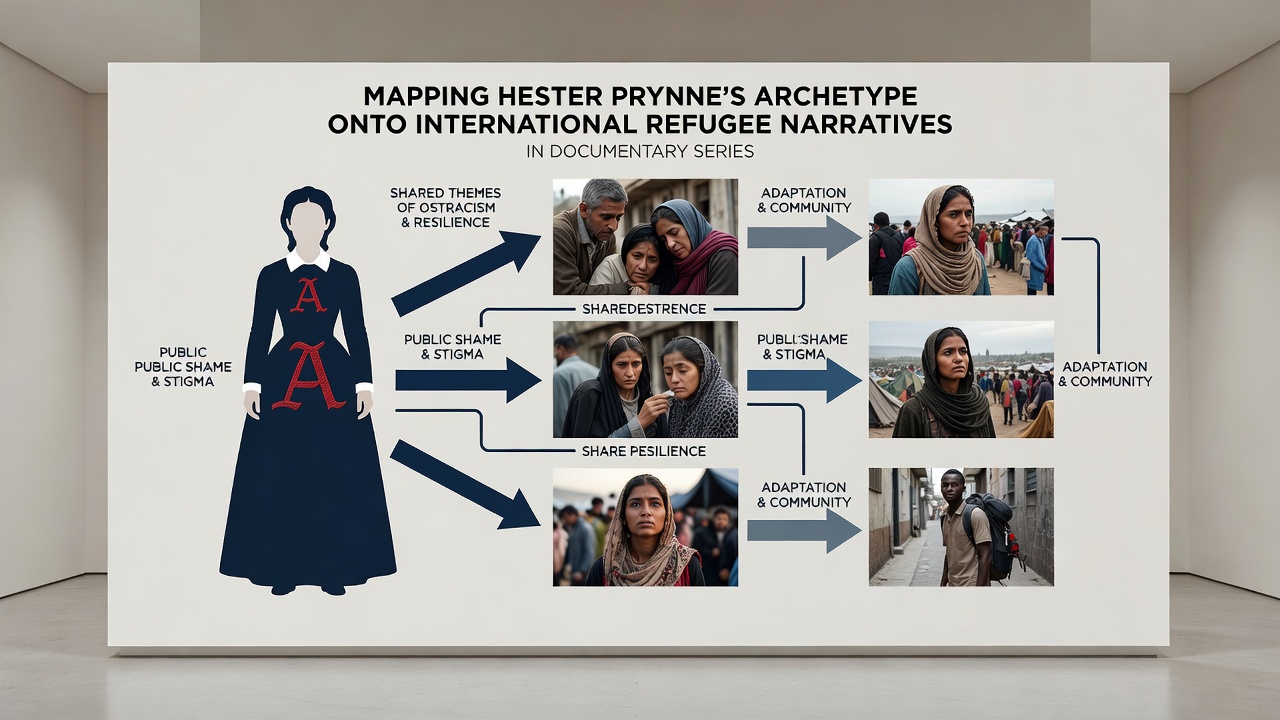
Additional examples emerge in North American productions that cover arrivals from Venezuela and Haiti, where directors select subjects who articulate the tension between maintaining dignity and facing repeated administrative scrutiny. Researchers who reviewed transcripts from these series found recurring phrases about "wearing the label" that echo the scarlet letter imagery without explicit quotation. In September 2026 a new eight-part series is scheduled to premiere on an international streaming service, focusing on women who have rebuilt lives in Scandinavia after journeys through multiple countries, and early press materials indicate the production will open each episode with a visual motif of embroidered cloth against bureaucratic forms.
Production Techniques and Source Material
Directors employ split-screen comparisons between dramatized scenes from the novel and contemporary interviews, allowing viewers to observe similarities in posture and expression without spoken commentary. Sound design teams incorporate ambient recordings from border facilities alongside readings from Hawthorne's text, creating auditory bridges between eras. Academic partners at several universities have supplied annotated versions of the source material to ensure accuracy in these juxtapositions, while avoiding interpretive overlays that might shift the focus from the subjects' own words. Figures released by the International Organization for Migration show that female-headed households constitute approximately 40 percent of registered refugee cases in certain regions, providing statistical context that series integrate into background graphics.
Conclusion
Series that apply this mapping continue to draw from an expanding archive of personal accounts and institutional data, with new episodes scheduled through 2027 that extend the approach to additional regions including parts of Southeast Asia and the Horn of Africa. Production notes from ongoing projects list partnerships with resettlement organizations that supply verified participant stories, ensuring the narratives remain grounded in documented experiences. The approach persists because the structural elements of marked identity, maternal responsibility, and gradual reintegration appear consistently across the footage collected by independent and publicly funded teams alike.